Practice, not perfectionism, makes perfect (pots)

Artists David Bayles and Ted Orland, in their book, Art & Fear tell of an art teacher who experimented with the grading system for two groups of students.

Not quite your cup of tea? Keep practising! Image © www.istockphoto.com/wildcat78
Not quite your cup of tea? Keep practising!
Image © http://www.istockphoto.com/wildcat78

The story illustrates how practice can make perfect, while perfectionism can hinder progress.

Here’s what happened:

The ceramics teacher announced on opening day that he was dividing the class into two groups. All those on the left side of the studio, he said, would be graded solely on the quantity of work they produced, all those on the right solely on its quality.

His procedure was simple: on the final day of class he would bring in his bathroom scales and weigh the work of the “quantity” group: fifty pounds of pots rated an “A,” forty pounds a “B,” and so on.

Those being graded on “quality,” however, needed to produce only one pot – albeit a perfect one – to get an “A.” Well, came grading time and a curious fact emerged: the works of the highest quality were all produced by the group being graded for quantity.

It seems that while the “quantity” group was busily churning out piles of work – and learning from their mistakes – the “quality” group had sat theorising about perfection, and in the end had little more to show for their efforts than grandiose theories and a pile of dead clay.

Learn from our mistakes

The story certainly challenges me to examine areas where I may be holding back until I work out the ideal solution in my mind before taking the first step in a project or venture.

In today’s climate of often excessive risk management, we can ironically run the risk of failing to make progress by trying to avoid failure. The ‘ideal solution’ will never materialise unless we experiment and learn from our mistakes.

Being involved in corporate governance in one of my roles, I appreciate the importance of taking an overview of those things that could go wrong in an organisation and putting the systems in place to minimise their likelihood. But we still need to take calculated risks in order to reach the best outcomes.

Waiting for the perfect solution to crystallise before taking action is a common problem among bloggers. Sometimes the best answer is, as the saying goes: just ship it! In other words, just write what’s on your mind and post it. Beat the blog post-ponement syndrome!

What are the areas in your life where you need to make a few pots – or even break a few pots – to see some progress?

More fruitful life beyond the man drawer

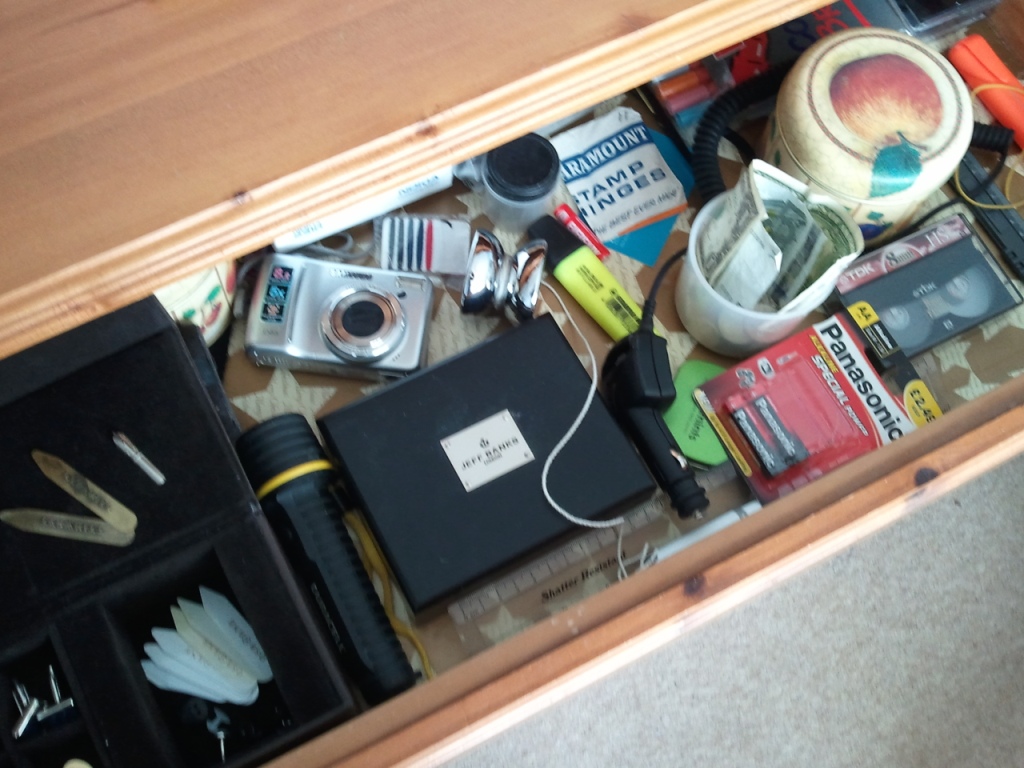
In a hilarious part of his routine a few years ago, British comedian Michael McIntyre delved into every male’s trusty treasure trove – the man drawer.

The man drawer
The man drawer

If you’re a man, you possess a man drawer. If you’re a woman (this post is relevant to you too), you know a man who has one.

It’s the sole domestic storage area that every man needs – or thinks he needs. As McIntyre paints it so vividly, it contains batteries of indeterminate life, instructions for appliances we don’t own any more and coins of foreign currencies made obsolete by the euro.

If our approach to planning involves only a catch-all to-do list, this is a bit like rummaging randomly through the man drawer.

Without some kind of structure, our actions are triggered by whatever items grab our attention. “Yay, it’s that Sony Walkman cassette player you can’t buy in the shops anymore. I think I’ll see if those old cassettes from my student days are still in the loft.”

Branching out for fruitfulness

Virtually all time management approaches I’m aware of recognise the need to compartmentalise the areas of our lives. These are the logical extension to the man drawer – more like a chest of drawers.

The key areas may be role-based – leader, parent, financial steward – or settings based – company, athletics club, church. They will most likely be a combination of both.

In the parable of the vine (John 15), Jesus describes believers as branches of himself, the true vine. In wine-growing, a branch that grows from the main vine is called a cordon or leader. These leading branches bear other smaller branches from which the grape clusters grow.

I like to think of the sub-branches as a picture of the areas of our lives in which we are called to bear fruit. These could be workplace, ministry, family, finances, spiritual growth, wellbeing and relationships. They all form part of our lives – the ‘leaders’ – and are also connected to the same, true rootstock himself.

Taking a regular overview of our lives involves looking to the vine from which we grow, knowing that he supports, informs and empowers us in each branch of life.

We can use this picture as a way of reviewing our ‘sub-branches’, knowing they are all part of the overall picture of our lives. And we can remind ourselves that they are all connected to, fed and nourished by the true vine himself as we stay in step with his purposes.

6 steps from saturation to regeneration

Time to lighten the load?Image istockphoto.com
Time to lighten the load?
Image © istockphoto.com

Overload is a common symptom of twenty-first-century life. The weight of expectation from employers, clients, family, friends and even ourselves often leads us to take on too much and reach saturation. Be encouraged. Help is at hand.

There’s a remarkable material called activated carbon cloth (not the above-mentioned help, but stay with me).

It has an amazing property. Every visible square metre has an actual 100,000 square metre surface area.

It’s used in filters, protective clothing and wound dressings to adsorb – take up – odorous or harmful molecules. The molecules accumulate on its vast ‘hidden’ surface area. But even this techie textile has its limits: it too eventually becomes saturated.

However, it can be regenerated by an electrical charge, heat or washing. It’s then ready for re-use.

Here are six scriptural steps towards our own regeneration after – or preferably before – we reach saturation:

1 Approach: Come to me

In the parable of the yoke¹, Jesus said: “Come to me all you who labour and are heavy laden.” There’s a job description with which many of us can identify. The first step is to accept Jesus’ open invitation to approach him in prayer.

2 Attach: Take my yoke

The good news is that we’re offered one half of a double yoke – the crossbar fitted to a pair of oxen – to lighten our load. Through it, we get attached to an ox with infinitely greater pulling power than ours: Jesus himself. This is a bit like attaching my depleted 1.5 volt battery to his 1000 megawatt power station for a charge-up.

3 Abandon: Cast your burden

We’re encouraged to ‘cast our burden’² onto Jesus’ shoulders. Be honest and specific about which particular cares and concerns you’re offloading. And know that the floorboards of heaven won’t crack under the strain of your erstwhile ‘stuff.’

4 Appropriate: Learn from me

Jesus is, among other things, ‘gentle and humble in heart.’ We may think: ‘That’s fine for him, but it’s the last thing I feel.’ But the point is that, through our yoke of connection, his strengths flow to us. And these include the very antidotes to the burdens we’ve been carrying.

When he says: “Learn from me,” he means learning by his example and what he teaches in scripture.  We’re also taught by the Holy Spirit, the ‘Counsellor’ and ‘Spirit of truth… (who)…will guide you into all truth.’³ The Spirit points us to and explains scripture, and reveals truth to us through wider revelation too.

5 Accept rest: Find rest for your souls

Peace of mind is the promised outcome of all of the above. The key is not trying to figure out the solution solely in our strength. We come to enjoy peace within despite the external circumstances, because of our heart-to-heart connection with the Prince of peace himself.

There’s a practical side to rest here too. We need to build in times of rest to our lives, punctuating both the days and the seasons, in order to stay fresh.

6 Abide: If you abide in me…†

Staying in living union with Jesus is the preventive medicine against saturation. When we accept him as Lord and Saviour, we already have that union. The key is to remain in close, prayerful relationship with him and in agreement with his words – highlighted to us through scripture and the Spirit’s direct and indirect revelation.

How does our perception of God’s size and our sense of connectedness – or otherwise – to him influence our own capacity to stay fresh and energised?

¹ Matthew 11:28-30 NKJV     ² Psalm 55:22 NKJV

³ John 16:13 NKJV                    † John 15:7 NKJV  

4 open doors when others slam shut

All of us face times in life when something in which we had invested comes to an end. It could be financial, vocational or relational. Whether the door slams shut suddenly or even closes gradually, what do we do next?

Stepping up to the open doorImage wwwistockphoto.com
Stepping up to the open door
Image © http://www.istockphoto.com

I spoke to a research scientist yesterday who was recently made redundant after his project funding stopped. In another conversation, a contact in vocational ministry told me how a longstanding annual event of which he was on the leadership team has been cancelled.

I can relate to both, having taken a hit in business just over four years ago when the credit crunch bit sharply. I regrouped very quickly and didn’t let the experience get me down. But I did need to open some new doors, or walk further beyond those already open.

Here are some of the doors that have helped me in recent years (and may prompt you in finding yours):

Door of community

Both of the above conversations took place in a church community where support and encouragement can be found in times of change. When you suddenly find yourself outside your familiar workplace or project ‘circle,’ life can be harder if you don’t have a core community on which you can depend.

Door of creativity

While I’m deeply committed to my business interests, I don’t invest every ounce of my identity in them. So my sense of worth does not fluctuate with the highs and lows of business performance. Which doors can you open to balance out the over-emphasis we can all place on validation by work? One big passion for me is writing and playing songs. You also have a creative capacity which is ripe for exploring.

Door of technology

Many businesses and ministries are adapting well to the opportunities offered by online media. And some high profile retailers have recently paid the price for adapting too slowly to competition from e-tailing. How can you turn the handle on the door of technology to your advantage? My wife and I met an old friend yesterday who was looking for a new church and had been attracted in after the church website showed up on google.

On an individual level: how could the combination of face-to-face contact and an online presence – or up-skilling in technology – help you reach your full potential for touching people’s lives?

The door

The above are just some of the doors we can walk through during times of change. But there is one door that, when we walk in close relationship with him, will guide us through all the right doors for us. Jesus said:

I am the door. If anyone enters by Me, he will be saved, and will go in and out and find pasture.

He meant more than eternal salvation here. Pasture is also God’s kingdom reality of peace, provision, protection and guidance to which we can turn in the here and now. No matter the ins and outs of life.

Which doors do you need to open – or venture further beyond – this week? Are there any doors you need to close?

5-a-day and the fruit of what we say

What’s in our hearts influences what we say and our spoken words in turn influence the fruit we’ll bear in life.

Fruitful talk refreshes livesImage istockphoto.com
Fruitful talk refreshes lives
Image © istockphoto.com

It’s well known that the fruit we take in through our mouths can be good for our health. Less prevalent is the idea that what we say – the fruit that comes out – can affect lives for good or ill.

There’s a proverb that goes: ‘From the fruit of his lips a man is filled with good things, as surely as the work of his hands rewards him.’¹ And Jesus revealed that man’s heart is the source of this fruit, teaching: ‘For out of the overflow of his heart his mouth speaks.’²

Back in the 90s, I handled the UK media work for one of the first national announcements of the health benefits of eating ‘5-a-day’ portions of fruit and veg. If I were to create a campaign today promoting 5 daily portions of spoken fruit, here are some memory joggers I’d recommend:

1. Gratitude fruit

A few moments taken to say thank you helps build relationships and co-operation. Several years ago a staff member told me how unusual it was for an employer to thank them for their work as they left for the evening. I know it made things easier when it came to asking them occasionally to start earlier to clear an urgent job.

2. Affirmation fruit

We may sing about not heeding ‘man’s empty praise.’ But we still need to give and receive wholehearted praise, as long as our main motive isn’t to pursue people’s plaudits. Being specific helps. Even better than “you did a good job,” is: “I appreciated the creativity and attention to detail you put into that design in the tight timescale.”

3. Response fruit

The ‘fruit of our fingertips’ also matters – what we ‘say’ through our various electronic devices. Fast response to email messages – even if you can’t give the full answer right away – is good fruit. Quick acknowledgment of twitter follows and mentions or LinkedIn endorsements also helps. Engage well with others and they’ll give your messages a better hearing.

4. Feedback fruit

Giving and receiving feedback well is an art in itself. Keys to giving constructive criticism include: a) exercise the first two fruits regularly, b) keep your cool, c) if possible, open and close with something positive, and d) don’t leave it so long that the matter festers or the feedback is untimely.

5. Declaration fruit

There is power in speaking out life by faith into your own and others’ situations. Igniting Hope Ministries offer some great examples of this kind of declaration.

Glasgow’s motto is in fact a Christian declaration inspired by its 6th Century founder, St Mungo:

Let Glasgow flourish by the preaching of Thy word and the praising of Thy name

I came across a Glasgow church recently where the whole congregation speaks blessings together over the city during Sunday worship. Their declaration starts with Proverbs 11:11 – ‘By the blessing of the upright a city is exalted’ – and closes with the city motto.

Could ‘5-a-day’ become the new motto for speaking out good fruit? Then again, it’s the speaking from the heart and not the frequency that counts.

¹ Proverbs 12:14 NIV     ² Luke 6:45b NIV


5 keys to re-focus your vision for this year

Whether you’re raring to go at the start of this New Year, wrestling with difficult issues, or both, now is a good time to sharpen your vision.

Vision Pay Binoculars
For a clearer vision, turn to God
Image © istockphoto.com

Over the past five years, along with many highpoints, I’ve experienced several setbacks. I’ve taken hits with family health, with finances and in business. Some dreams were put on hold, but I’m seeing the turnarounds.

What motivates me is the certain knowledge that God will sustain me in all circumstances and, with my co-operation, enable what he has placed and will place on my heart.

How do you and I rekindle the fire of past visions or ignite new ones? ‘Having sorrow’ in his heart and feeling distant from God as he faces one of his hardest trials, King David pleads for revelation:

Consider and hear me, O Lord my God;
Enlighten my eyes.

Knowing well the solution to his plight, he goes on:

But I have trusted in Your mercy;
My heart shall rejoice in Your salvation.
I will sing to the Lord,
Because He has dealt bountifully with me.¹

Here are five keys, unpacked from these lines and my own experience, for overcoming trials and re-vitalising the vision:

1.  Revelation – look upwards

I am clear about my God-given vision, and am sure that he will supply me with everything I need to see it happen. I also know that he will meet my every need today – not just the big picture stuff.

In asking ‘enlighten my eyes,’ I don’t believe David was looking for more head knowledge, but for his eyes to be opened supernaturally by revelation directly from the Holy Spirit.

For a clearer vision, turn to God – in business, in ministry, in family life, community or finances. He will reveal it to you in ways you don’t always expect.

2.  Remembrance – look back in gratitude

Whether you aim to reach a particular goal or overcome an obstacle this year, recall with gratitude the times when God brought you through a major impasse or favoured you. When he ‘dealt bountifully with you.’

I recall having a hunch after a lean spell in business several years ago to call a former local authority client I hadn’t spoken to for a year or so. As she took my call she was astonished: “That’s really weird! I was just about to phone you today.” That call led to a major contract that would then be replicated by three other Scottish local authorities. I thank God for my hunch – and the four contracts. If he did it before, he’ll do it again.

3.  Reliance – look to and trust God

There’s a strand of popular culture which encourages people to be wholly self-reliant and proclaims the mantra: ‘I can have it all.’ That’s fine for a time, when the job’s going well, you’re in rude health and the new car is in the driveway. But where do you turn when the wheels come off through reduced income, redundancy, workplace pressures, conflicts or illness? Christian culture encourages God-reliance and declares truths such as: ‘We are more than a conquerors though him who loved us’² and ‘I can do all things through Christ who strengthens me.’³ Not literally anything, but those things he intends for us personally and equips us for.

4.  Rejoicing – look forward in expectation

Just because your dream has perhaps been deferred, don’t defer the hope that will help you to see it realised. Thank God in advance for the breakthroughs that you want to see in your life, your business, your ministry, your family and community; praise him now for the coming fulfilment of the vision he has ‘enlightened your eyes’ with.

5. Reconnection – look to the Life within you

At the heart of new covenant faith is living life in connection with the living God – within us. The apostle Paul describes this ‘once hidden mystery’ as:

Christ in you, the hope of glory† (emphasis mine)

The secret of Christian living is the glorious life and hope of Jesus himself within you. That truth in itself – the Truth himself – keeps my flame burning. May your flame burn brightly in the year ahead too.

Question: what has been put on hold in your life that you feel can now be re-activated and what’s your next step?

¹ Psalm 13:3,4-6 NKJV    ² Romans 8:37 NIV

³ Philippians 4:13 NKJV   † Colossians 1:27 NIV

Focus with flexibility

I’d just been reading about how an international speaker made time to go horse riding with his student daughter hours before heading off to the UK for a speaking tour.

SAMSUNG
Time to walk away from the schedule to the walkway?

Moment’s later, my daughter – also a student – came into my study and said, “Dad, I wish we could go shopping.” She was referring to the fact that my wife had taken my older son to the sales in Glasgow today.

I’d had other, work-related plans for the afternoon but decided to down tools and spend some quality time with her and my other son instead.

No, we didn’t go shopping, but went for a late lunch in a local café followed by a drive into the Clyde Valley and a wander along the Clyde Walkway in the light rain and unseasonably mild temperatures.

Unique ability

Her Sketchers walking shoes were more suited to retail therapy than rural therapy, so when we came to a path-turned-stream leading down to the riverside walkway, I scooped her up in my arms and carried her to dry land. That was the first time I’d picked her up since she was a little girl – a spontaneous and special moment.

On the way back to the car my son spotted a couple of dippers – of the feathered rather than becostumed variety – feeding where the Mashock Burn meets the river. According to the RSPB website, dippers are ‘unique in the songbirds, for their ability to wade, swim and dive in running water’ – unlike my daughter in her footwear.

This afternoon reminded me that, while it’s good to have a plan, it’s important not to be so focused as to be inflexible and miss your real priorities in life – and family is one of our greatest priorities of all. I returned home refreshed and relaxed after taking some time out with my family, and still managed to do the other things I’d set out to do today.

I’m reminded of the lines from the old hymn, For the Beauty of the Earth:

‘For the joy of human love, Brother, sister, parent, child…Lord of all to Thee we raise, This our grateful hymn of praise.’

Do you need to pull back from your schedule for a time and make space for the people who matter most in your life – just to hang out together with no agenda? I’m grateful I did.

Get up and go: the edge of the early riser

Research studies point to early birds having an edge over night owls in several areas of personal effectiveness. Is it possible – or even desirable – for midnight oil burners to change?

Image courtesy of www. istockphoto.com
Image © www. istockphoto.com

Although genetic factors may influence our leanings, it is possible to bring our day forward. And there are benefits to be had.

Early birds are inclined to:

  • be more proactive
  • focus better on long term goals
  • anticipate and minimise problems
  • perform better and get ahead at work

During my student days and earlier in my career, I was definitely in the night owl camp. These days, I’m more of an intermediate (I can’t think of a type of bird for that) – able to get up early when it’s important and less inclined to stay up late.

How do we change our routine and get off to an earlier start? Here are some suggested steps:

Pray about it

At the start, commit your intention to get up earlier to God and ask for His help. Reflect on scripture references to rising early (good examples are Psalm 5:3, Psalm 63:1 and Mark 1:35).

Change the label

Check how you label yourself. Chances are, if you keep saying: “I’m a night owl and I’ll never change,” this will remain true. Rewrite your ‘script’ along the lines of: “I’m used to staying up late, but I can and will take steps to change this.”

Earlier to bed

Everyone needs a certain amount of sleep – normally seven or eight hours. I may be stating the blindingly obvious, but if you want to get up at 6.30am, and you know you need seven and a half hours sleep, this means being in bed and asleep by 11pm.

Evening cool down

Adjust your evening routine so that you’re not over-stimulating your brain after mid-evening. As a keyboard player, for example, I try to avoid playing too much up tempo music as the evening wears on as I know it psyches me up.

Curb the caffeine

A big contributor to getting off to sleep late is excessive caffeine. If you drink a lot of caffeinated drinks throughout the day, try switching to decaf tea of coffee after lunchtime and you’ll see a difference.

Morning quiet time

If you don’t already do so, build a quite time with God into your early morning routine. For more tips on this, see my recent post ‘The best time investment you could ever make.’

If at first you don’t succeed…

If you do feel the need to make the switch to being an earlier bird and you don’t quite catch the worm first time, don’t give up. With persistence and by the power of God, you can make the change.

Question: what steps have worked best for you if you have made some positive moves in bringing forward your daily routine?

5 values for success

D L'Herroux H&S cropThis is a guest post by David L’Herroux, managing director of UCB, the UK’s largest Christian media ministry. Earlier in his career he went from cleaner to board director, leading a discount chain for a top retailer. You can follow him on twitter

David believes that it is not your circumstances that will make or break you, but it is the choice you make to respond positively that will lead you to ultimate success.

Here he sets out the five biblical principles that shape his leadership approach at UCB, summed up in the acronym: REACT.

Remember

A healthy starting point for focusing our attitudes is to remember the goodness and faithfulness of God. I encourage our own staff to look at how God has brought us through this ministry journey thus far.

As Psalm 103:2 says:

‘Bless the Lord, O my soul; And forget not all His benefits.’ (NKJV)

We constantly remind ourselves here at UCB of those who have gone before us. This means  honouring those who founded the ministry, those who have walked all or part of the journey and those who have sacrificed much to take the ministry to where it is today

Evaluate

We measure the success of the ministry by its fruits. Evaluation starts with ourselves: we review our own calling in line with God’s given vision and make sure that if we have drifted away from the vision, that we re-align back to it. We apply this to each team, then the whole ministry, and ask the question: ‘Am I – are we – bearing fruit?’

Also, there are only two things by which a ministry can reach its full potential. These are, in Jesus’ own words (Matthew 22: 37-40):

‘Love the Lord your God with all your heart and with all your soul and with all your mind. This is the first and greatest commandment. And the second is like it: Love your neighbour as yourself.’ (NIV)

The second is the outcome of the first commandment. It all starts with our relationship with God – everything flows from there.

Alignment

For the sake of relevance do not compromise the word of God, for it is engagement and alignment with the truth of the word that sets people free. Also, recognise the overcoming power of testimonies (see Revelation 12:11) and beware of tampering with them for the sake of relevance and, therefore, taking the truth out of them and making them powerless. The Hebrew root of testimony means ‘do again’ – every time a testimony is spoken it comes with God’s covenant to repeat the miracle.

Change

Change is part of our daily lives; however it’s our choice to accept it or reject it. We tend to accept the changes that we are in control of and often we resent the changes imposed on us. The sooner that we learn how to respond to the latter, the quicker we’ll reach our full potential.

Trust

Ultimately our success will depend upon our trust in the Lord. It’s a walk by faith, not feeling. We’re encouraged in Proverbs 3:5-6 to:

‘Trust in the LORD with all your heart and lean not on your own understanding; in all your ways submit to him, and he will make your paths straight.’ (NIV)

And again in Jeremiah 17:7-8:

‘But blessed is the one who trusts in the LORD, whose confidence is in him. He will be like a tree planted by the water that sends out its roots by the stream… It has no worries in a year of drought and never fails to bear fruit.’ (NIV)

We stay fruitful as we trust in and draw on the strength, truth and unlimited resources of the One for whom everything is possible.

To listen to UCB’s radio channels, watch UCB TV or read The Word for Today, visit www.ucb.co.uk

The best time investment you could ever make

‘The minister can exchange his time for the divine power and the spiritual blessings to be obtained from heaven,’¹ wrote the Scots South African teacher and author, Andrew Murray.

Time well spentImage by courtesy of www.istockphoto.com
Time well spent
Image by courtesy of http://www.istockphoto.com

Although his context here was church ministry, the same principle applies to God’s ‘ministers’ in every stream of life. You could be a minister for God’s kingdom in business, the media, teaching, the arts, a family or a community.

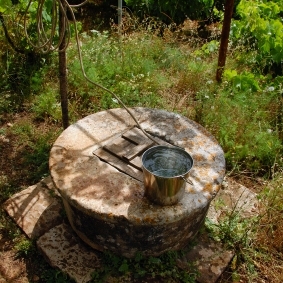
Minister comes from the Latin for ‘servant’ and one of its older meanings as a verb is ‘to supply.’ If we are to supply water from God’s well to others, we firstly need to draw deeply from Him. This requires regular, dedicated time – the most rewarding time investment you’ll ever make.

Don’t just rely on the ‘spiritual oases’

Over the past month I’ve attended a number of conferences and meetings. These were spiritual highs that refreshed me. It’s very tempting to rely on these occasional ‘oases’ alone to hear from God and quench our thirst for strength and direction. Rather than a feast or famine approach, however, I’ve found ‘a fair bit and often’ works best.

Quality time

Devote quality time to building a relationship with God in the same way that you spend time developing close relationships with a relative or friend. The more involved you are in ministry or management, then the more One-on-one time you’ll likely need to spend with Him.

Tailor

Tailor the ways you cultivate a relationship with God to the life you lead and not always that of a good role model.

Don’t necessarily try to copy someone you read about who rises at 5am every day to spend three hours in prayer and Bible study – although that’s some people’s calling. If you’re starting from a baseline of a quick five minutes of prayer in the car on the way to the office, try getting up at least half an hour earlier and finding the extra time that way.

Set a time

It may help you to set aside a specific quiet time each day. This avoids the temptation to put it off until later and not actually follow through. Don’t guilt trip yourself if it’s impossible to devote the first part of your day to God time. If you’ve been kept awake half the night by your teething toddler, you’ll probably have to find ten minute ‘time-outs’ until the phase passes.

Allow listening time

As Christians we often pray requests like: ‘Lord give us ears to hear’ and then spend all our prayer time only asking, interceding and so on (been there!). Allow time to hear back from the Holy Spirit, perhaps asking Him direct questions on situations or to help you understand – or point out – a particular guiding scripture.

Commit everything

Proverbs 16:3 says: ‘Commit everything you do to the Lord and your plans will succeed.’ (NIV). This is something I especially try to apply to planning sessions. I might say up front: ‘I commit this planning time to you, Lord, and invite you to direct me in each area.’ The language may change, but the main thing is I want to acknowledge that I need His input in every situation.

There’s no set formula for how to spend quality time with God because we’re all unique and have diverse personalities, talents and responsibilities.

What we all have in common, though, is a finite water bucket, which, when sunk regularly  into God’s infinite well, gives us a constantly replenished capacity to serve Him and others.

¹From The Prayer Life: Hints For The Inner Chamber, by Andrew Murray