5 keys to re-focus your vision for this year

Whether you’re raring to go at the start of this New Year, wrestling with difficult issues, or both, now is a good time to sharpen your vision.

Vision Pay Binoculars
For a clearer vision, turn to God
Image © istockphoto.com

Over the past five years, along with many highpoints, I’ve experienced several setbacks. I’ve taken hits with family health, with finances and in business. Some dreams were put on hold, but I’m seeing the turnarounds.

What motivates me is the certain knowledge that God will sustain me in all circumstances and, with my co-operation, enable what he has placed and will place on my heart.

How do you and I rekindle the fire of past visions or ignite new ones? ‘Having sorrow’ in his heart and feeling distant from God as he faces one of his hardest trials, King David pleads for revelation:

Consider and hear me, O Lord my God;
Enlighten my eyes.

Knowing well the solution to his plight, he goes on:

But I have trusted in Your mercy;
My heart shall rejoice in Your salvation.
I will sing to the Lord,
Because He has dealt bountifully with me.¹

Here are five keys, unpacked from these lines and my own experience, for overcoming trials and re-vitalising the vision:

1.  Revelation – look upwards

I am clear about my God-given vision, and am sure that he will supply me with everything I need to see it happen. I also know that he will meet my every need today – not just the big picture stuff.

In asking ‘enlighten my eyes,’ I don’t believe David was looking for more head knowledge, but for his eyes to be opened supernaturally by revelation directly from the Holy Spirit.

For a clearer vision, turn to God – in business, in ministry, in family life, community or finances. He will reveal it to you in ways you don’t always expect.

2.  Remembrance – look back in gratitude

Whether you aim to reach a particular goal or overcome an obstacle this year, recall with gratitude the times when God brought you through a major impasse or favoured you. When he ‘dealt bountifully with you.’

I recall having a hunch after a lean spell in business several years ago to call a former local authority client I hadn’t spoken to for a year or so. As she took my call she was astonished: “That’s really weird! I was just about to phone you today.” That call led to a major contract that would then be replicated by three other Scottish local authorities. I thank God for my hunch – and the four contracts. If he did it before, he’ll do it again.

3.  Reliance – look to and trust God

There’s a strand of popular culture which encourages people to be wholly self-reliant and proclaims the mantra: ‘I can have it all.’ That’s fine for a time, when the job’s going well, you’re in rude health and the new car is in the driveway. But where do you turn when the wheels come off through reduced income, redundancy, workplace pressures, conflicts or illness? Christian culture encourages God-reliance and declares truths such as: ‘We are more than a conquerors though him who loved us’² and ‘I can do all things through Christ who strengthens me.’³ Not literally anything, but those things he intends for us personally and equips us for.

4.  Rejoicing – look forward in expectation

Just because your dream has perhaps been deferred, don’t defer the hope that will help you to see it realised. Thank God in advance for the breakthroughs that you want to see in your life, your business, your ministry, your family and community; praise him now for the coming fulfilment of the vision he has ‘enlightened your eyes’ with.

5. Reconnection – look to the Life within you

At the heart of new covenant faith is living life in connection with the living God – within us. The apostle Paul describes this ‘once hidden mystery’ as:

Christ in you, the hope of glory† (emphasis mine)

The secret of Christian living is the glorious life and hope of Jesus himself within you. That truth in itself – the Truth himself – keeps my flame burning. May your flame burn brightly in the year ahead too.

Question: what has been put on hold in your life that you feel can now be re-activated and what’s your next step?

¹ Psalm 13:3,4-6 NKJV    ² Romans 8:37 NIV

³ Philippians 4:13 NKJV   † Colossians 1:27 NIV

First posted in January 2013

7 keys to help make your 2014 a vintage year

Insights inspired by 7 top vine-growers in A Year In Burgundy

One of the first films I tippled this year was A Year In Burgundy. It followed the lives of a number of winemakers and their vines through the changing seasons of the year.

The annual cycle that produces some of the world’s finest wines yields a number of valuable life lessons.

Learning from the ultimate Vine-grower is key ©shutterstock.com/Yellowj
Learning from the ultimate Vine-grower is key
©shutterstock.com/Yellowj

1   Value your uniqueness

Science and market expectations are pushing some winemakers towards producing samey wines, as one maker observed. As long as this standardisation is resisted, the uniqueness of each vintage can be enjoyed, drawing on each vintner’s unique personality.

Similarly, you and I are unique and we don’t need to try to live out someone else’s life. Each of us is a one-off creation with a distinctive ‘flavour’ based on a special personality, set of talents and individual assignment.

2   Take time to take root

Vines need to be allowed time to put down deep roots, which can stretch down as far as four or five metres. This means relying on the rain alone – even punctuated by dry spells – and not frequent irrigation, which leads to shallow roots.

In cultivating our relationship with God, we need to develop a strong root system by spending quality time focusing our affections on Him and learning to rely on Him, whatever the weather of circumstances. ‘Irrigation’ by other people’s revelations and insights, while valuable, is not enough to enable us to develop those strong tap roots grown through one-on-one time with God himself.

3   You have to be part of part of the vine’s life

One vine-grower summed up her approach to understanding what the vine needs to be able to thrive: “You have to be part of the life of the vine.”

Unwittingly, she hit on a vital key to grasping our true identity and thriving in life. Jesus said: ‘I am the vine, you are the branches, He who abides in me, and I in him, bears much fruit.’¹

A branch is part of the life of the vine, as long as it abides in – stays connected to – the vine. You and I, through faith and ongoing relationship with him, are part of the life of Jesus. Your fruit – character, atmosphere, influence, accomplishments or impact on others – is actually his fruit, which he nurtures, nourishes and releases from within you.

4   Create breathing space

During summer, the above winemaker gathered together the topmost vine branches, bent them over in an arch and tied them to the top trellis wire. She doesn’t tie them together too tightly, she explained, “so that they can breathe.”

Consider trellises as a metaphor for frameworks, structures and systems. While important, the system needs to be the servant and not the master. Vine-growers grow vines that bear fruit, not trellises. In church, work and privately, if we bind life too tightly to the institution, ‘the way things are done around here’ or too rigid a personal masterplan, we run the risk of operating in a legalistic, rules-based way that stifles life and lasting growth.

5   Time your harvest well

Timing the harvest of the ripe grape clusters is crucial, and closely studying the weather is key to picking the optimal time. Rain too close to the harvest can cause oversized grapes, hailstones damage the grapes, and, if left on the vine too long, the grapes will spoil.

Picking our moments in spiritual, workplace and relational contexts is also vital. It may be a question of when to share our faith, offer to pray for someone or take part in an outreach. Or it could be when and how to approach a prospect, challenge a colleague or launch a new initiative. Staying tuned into God for wisdom on timing is key.

6   Value pruning

Pruning of vine branches takes place at the end of the season, strengthening the roots for the next year’s harvest. The cut branches are then burned and the ashes used to enrich the soil. There are areas where we all need ‘pruning’, both in the sense of removing material ‘stuff’ from our lives, as well as activities, habits and mindsets.

Something that was fruitful in a past season of your life, that was good for that phase, may now need to be laid down. Does a particular job function or ministry role need now to make way for your next assignment, or perhaps for a dream that you have been putting off for months or even years?

7   Offer quality fruit

During the harvest, one exercised winemaker berated some of the grape pickers for putting damaged fruit into the harvesting paniers. Appealing them to respect his work, he then showed them how to remove the damaged grapes and let them fall to the ground. Thinking this through, I am challenged always to offer the best I can, whether in business, ministry or relational life, and not cut corners.

In this new growth cycle of your life in 2014, how does the vine-growing year inspire you to make sure it’ll be a good vintage? Learning from the ultimate Vine-grower², as I continually find,  is key.

¹   John 15:5 NKJV     ²   John 15:1 NKJV

More fruitful life beyond the man drawer

In a hilarious part of his routine a few years ago, British comedian Michael McIntyre delved into every male’s trusty treasure trove – the man drawer.

The man drawer
The man drawer

If you’re a man, you possess a man drawer. If you’re a woman (this post is relevant to you too), you know a man who has one.

It’s the sole domestic storage area that every man needs – or thinks he needs. As McIntyre paints it so vividly, it contains batteries of indeterminate life, instructions for appliances we don’t own any more and coins of foreign currencies made obsolete by the euro.

If our approach to planning involves only a catch-all to-do list, this is a bit like rummaging randomly through the man drawer.

Without some kind of structure, our actions are triggered by whatever items grab our attention. “Yay, it’s that Sony Walkman cassette player you can’t buy in the shops anymore. I think I’ll see if those old cassettes from my student days are still in the loft.”

Branching out for fruitfulness

Virtually all time management approaches I’m aware of recognise the need to compartmentalise the areas of our lives. These are the logical extension to the man drawer – more like a chest of drawers.

The key areas may be role-based – leader, parent, financial steward – or settings based – company, athletics club, church. They will most likely be a combination of both.

In the parable of the vine (John 15), Jesus describes believers as branches of himself, the true vine. In wine-growing, a branch that grows from the main vine is called a cordon or leader. These leading branches bear other smaller branches from which the grape clusters grow.

I like to think of the sub-branches as a picture of the areas of our lives in which we are called to bear fruit. These could be workplace, ministry, family, finances, spiritual growth, wellbeing and relationships. They all form part of our lives – the ‘leaders’ – and are also connected to the same, true rootstock himself.

Taking a regular overview of our lives involves looking to the vine from which we grow, knowing that he supports, informs and empowers us in each branch of life.

We can use this picture as a way of reviewing our ‘sub-branches’, knowing they are all part of the overall picture of our lives. And we can remind ourselves that they are all connected to, fed and nourished by the true vine himself as we stay in step with his purposes.

5-a-day and the fruit of what we say

What’s in our hearts influences what we say and our spoken words in turn influence the fruit we’ll bear in life.

Fruitful talk refreshes livesImage istockphoto.com
Fruitful talk refreshes lives
Image © istockphoto.com

It’s well known that the fruit we take in through our mouths can be good for our health. Less prevalent is the idea that what we say – the fruit that comes out – can affect lives for good or ill.

There’s a proverb that goes: ‘From the fruit of his lips a man is filled with good things, as surely as the work of his hands rewards him.’¹ And Jesus revealed that man’s heart is the source of this fruit, teaching: ‘For out of the overflow of his heart his mouth speaks.’²

Back in the 90s, I handled the UK media work for one of the first national announcements of the health benefits of eating ‘5-a-day’ portions of fruit and veg. If I were to create a campaign today promoting 5 daily portions of spoken fruit, here are some memory joggers I’d recommend:

1. Gratitude fruit

A few moments taken to say thank you helps build relationships and co-operation. Several years ago a staff member told me how unusual it was for an employer to thank them for their work as they left for the evening. I know it made things easier when it came to asking them occasionally to start earlier to clear an urgent job.

2. Affirmation fruit

We may sing about not heeding ‘man’s empty praise.’ But we still need to give and receive wholehearted praise, as long as our main motive isn’t to pursue people’s plaudits. Being specific helps. Even better than “you did a good job,” is: “I appreciated the creativity and attention to detail you put into that design in the tight timescale.”

3. Response fruit

The ‘fruit of our fingertips’ also matters – what we ‘say’ through our various electronic devices. Fast response to email messages – even if you can’t give the full answer right away – is good fruit. Quick acknowledgment of twitter follows and mentions or LinkedIn endorsements also helps. Engage well with others and they’ll give your messages a better hearing.

4. Feedback fruit

Giving and receiving feedback well is an art in itself. Keys to giving constructive criticism include: a) exercise the first two fruits regularly, b) keep your cool, c) if possible, open and close with something positive, and d) don’t leave it so long that the matter festers or the feedback is untimely.

5. Declaration fruit

There is power in speaking out life by faith into your own and others’ situations. Igniting Hope Ministries offer some great examples of this kind of declaration.

Glasgow’s motto is in fact a Christian declaration inspired by its 6th Century founder, St Mungo:

Let Glasgow flourish by the preaching of Thy word and the praising of Thy name

I came across a Glasgow church recently where the whole congregation speaks blessings together over the city during Sunday worship. Their declaration starts with Proverbs 11:11 – ‘By the blessing of the upright a city is exalted’ – and closes with the city motto.

Could ‘5-a-day’ become the new motto for speaking out good fruit? Then again, it’s the speaking from the heart and not the frequency that counts.

¹ Proverbs 12:14 NIV     ² Luke 6:45b NIV


Focus with flexibility

I’d just been reading about how an international speaker made time to go horse riding with his student daughter hours before heading off to the UK for a speaking tour.

SAMSUNG
Time to walk away from the schedule to the walkway?

Moment’s later, my daughter – also a student – came into my study and said, “Dad, I wish we could go shopping.” She was referring to the fact that my wife had taken my older son to the sales in Glasgow today.

I’d had other, work-related plans for the afternoon but decided to down tools and spend some quality time with her and my other son instead.

No, we didn’t go shopping, but went for a late lunch in a local café followed by a drive into the Clyde Valley and a wander along the Clyde Walkway in the light rain and unseasonably mild temperatures.

Unique ability

Her Sketchers walking shoes were more suited to retail therapy than rural therapy, so when we came to a path-turned-stream leading down to the riverside walkway, I scooped her up in my arms and carried her to dry land. That was the first time I’d picked her up since she was a little girl – a spontaneous and special moment.

On the way back to the car my son spotted a couple of dippers – of the feathered rather than becostumed variety – feeding where the Mashock Burn meets the river. According to the RSPB website, dippers are ‘unique in the songbirds, for their ability to wade, swim and dive in running water’ – unlike my daughter in her footwear.

This afternoon reminded me that, while it’s good to have a plan, it’s important not to be so focused as to be inflexible and miss your real priorities in life – and family is one of our greatest priorities of all. I returned home refreshed and relaxed after taking some time out with my family, and still managed to do the other things I’d set out to do today.

I’m reminded of the lines from the old hymn, For the Beauty of the Earth:

‘For the joy of human love, Brother, sister, parent, child…Lord of all to Thee we raise, This our grateful hymn of praise.’

Do you need to pull back from your schedule for a time and make space for the people who matter most in your life – just to hang out together with no agenda? I’m grateful I did.

Get up and go: the edge of the early riser

Research studies point to early birds having an edge over night owls in several areas of personal effectiveness. Is it possible – or even desirable – for midnight oil burners to change?

Image courtesy of www. istockphoto.com
Image © www. istockphoto.com

Although genetic factors may influence our leanings, it is possible to bring our day forward. And there are benefits to be had.

Early birds are inclined to:

  • be more proactive
  • focus better on long term goals
  • anticipate and minimise problems
  • perform better and get ahead at work

During my student days and earlier in my career, I was definitely in the night owl camp. These days, I’m more of an intermediate (I can’t think of a type of bird for that) – able to get up early when it’s important and less inclined to stay up late.

How do we change our routine and get off to an earlier start? Here are some suggested steps:

Pray about it

At the start, commit your intention to get up earlier to God and ask for His help. Reflect on scripture references to rising early (good examples are Psalm 5:3, Psalm 63:1 and Mark 1:35).

Change the label

Check how you label yourself. Chances are, if you keep saying: “I’m a night owl and I’ll never change,” this will remain true. Rewrite your ‘script’ along the lines of: “I’m used to staying up late, but I can and will take steps to change this.”

Earlier to bed

Everyone needs a certain amount of sleep – normally seven or eight hours. I may be stating the blindingly obvious, but if you want to get up at 6.30am, and you know you need seven and a half hours sleep, this means being in bed and asleep by 11pm.

Evening cool down

Adjust your evening routine so that you’re not over-stimulating your brain after mid-evening. As a keyboard player, for example, I try to avoid playing too much up tempo music as the evening wears on as I know it psyches me up.

Curb the caffeine

A big contributor to getting off to sleep late is excessive caffeine. If you drink a lot of caffeinated drinks throughout the day, try switching to decaf tea of coffee after lunchtime and you’ll see a difference.

Morning quiet time

If you don’t already do so, build a quite time with God into your early morning routine. For more tips on this, see my recent post ‘The best time investment you could ever make.’

If at first you don’t succeed…

If you do feel the need to make the switch to being an earlier bird and you don’t quite catch the worm first time, don’t give up. With persistence and by the power of God, you can make the change.

Question: what steps have worked best for you if you have made some positive moves in bringing forward your daily routine?

The best time investment you could ever make

‘The minister can exchange his time for the divine power and the spiritual blessings to be obtained from heaven,’¹ wrote the Scots South African teacher and author, Andrew Murray.

Time well spentImage by courtesy of www.istockphoto.com
Time well spent
Image by courtesy of http://www.istockphoto.com

Although his context here was church ministry, the same principle applies to God’s ‘ministers’ in every stream of life. You could be a minister for God’s kingdom in business, the media, teaching, the arts, a family or a community.

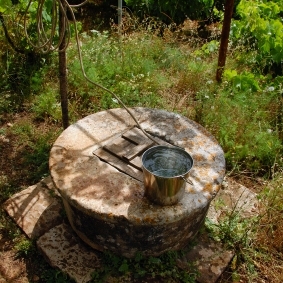
Minister comes from the Latin for ‘servant’ and one of its older meanings as a verb is ‘to supply.’ If we are to supply water from God’s well to others, we firstly need to draw deeply from Him. This requires regular, dedicated time – the most rewarding time investment you’ll ever make.

Don’t just rely on the ‘spiritual oases’

Over the past month I’ve attended a number of conferences and meetings. These were spiritual highs that refreshed me. It’s very tempting to rely on these occasional ‘oases’ alone to hear from God and quench our thirst for strength and direction. Rather than a feast or famine approach, however, I’ve found ‘a fair bit and often’ works best.

Quality time

Devote quality time to building a relationship with God in the same way that you spend time developing close relationships with a relative or friend. The more involved you are in ministry or management, then the more One-on-one time you’ll likely need to spend with Him.

Tailor

Tailor the ways you cultivate a relationship with God to the life you lead and not always that of a good role model.

Don’t necessarily try to copy someone you read about who rises at 5am every day to spend three hours in prayer and Bible study – although that’s some people’s calling. If you’re starting from a baseline of a quick five minutes of prayer in the car on the way to the office, try getting up at least half an hour earlier and finding the extra time that way.

Set a time

It may help you to set aside a specific quiet time each day. This avoids the temptation to put it off until later and not actually follow through. Don’t guilt trip yourself if it’s impossible to devote the first part of your day to God time. If you’ve been kept awake half the night by your teething toddler, you’ll probably have to find ten minute ‘time-outs’ until the phase passes.

Allow listening time

As Christians we often pray requests like: ‘Lord give us ears to hear’ and then spend all our prayer time only asking, interceding and so on (been there!). Allow time to hear back from the Holy Spirit, perhaps asking Him direct questions on situations or to help you understand – or point out – a particular guiding scripture.

Commit everything

Proverbs 16:3 says: ‘Commit everything you do to the Lord and your plans will succeed.’ (NIV). This is something I especially try to apply to planning sessions. I might say up front: ‘I commit this planning time to you, Lord, and invite you to direct me in each area.’ The language may change, but the main thing is I want to acknowledge that I need His input in every situation.

There’s no set formula for how to spend quality time with God because we’re all unique and have diverse personalities, talents and responsibilities.

What we all have in common, though, is a finite water bucket, which, when sunk regularly  into God’s infinite well, gives us a constantly replenished capacity to serve Him and others.

¹From The Prayer Life: Hints For The Inner Chamber, by Andrew Murray

One thing at a time!

I just took some time out on my mountain bike in the hilly countryside overlooking Carluke and spotted two deer crossing the single track road in the afternoon sun.

One woodland path at a time

The pair, who’d clearly been grazing in an adjacent field, saw me coming and high tailed it over a fence and back into the dense woods.

I was reminded of something I journaled a couple of days ago after emerging from a few very positive but nonetheless densely packed days:

‘One thing at a time.’

Also,  an online reading I’d seen yesterday came to mind. It’s title was :

‘One sequence at a time.’

Everyday life can be something like the forest that the deer disappeared into. It can be tempting to go from tree to tree – task to task – based on what’s right in front of us.

What would help us all make more progress is to stay focused on one woodland path at a time. That way we would make more headway.

I heard some months ago about one businessman who divides his day into 90-minute chunks so that he can make meaningful progress in each project area. Something as rigid may not be quite right for you or me and fit our workstyle or lifestyle. But the bones of something are there.

Perhaps one of things you need to do is take more time out – like the deer did from the woods – to be built up to enable to you to be a better builder.

This applies whether you’re a people builder, family builder, business builder or church builder. You can’t give out to the full what you yourself don’t fully have.

It takes intent and effort to set aside the time to be restored, whether mentally, spiritually, physically or relationally.

So, how will you go about getting out of the thickets of life to spend some time in the daylight to get recharged and re-assess your priorites?

Further question: what strategies are helpful in making sure we don’t get overwhelmed by too much ‘bitty’ activity and stay on top of often conflicting demands?

It’s about time

As I was starting out in my PR career back in the late 80s, I edited a newsletter for an electrical time switch manufacturing client. It was called About Time.

Image by courtesy of www.istockphoto.com

Little did I realise that, 25 years on, I would be writing again about time, helping myself and hopefully others ‘make some good switches’ in a different sense.

In this blog I’ll be sharing insights on time management and living life on purpose. And, yes, it is about time I got round to doing it!

To revisit the electrical theme: an appliance only operates properly when it is connected into the power source.

My blog’s title is inspired by the parable of the vine in the book of John. Here, Jesus told his disciples: ‘I am the true vine, and my Father is the head gardener.’¹

He added: ‘I am the vine, you are the branches. If a man remains in me and I in him, he will bear much fruit; apart from me you can do nothing.’²

He is talking about staying connected to him – the source – as the way of bearing fruit: of growing in character and fulfilling your purposes in life.

During my career I have used a number of different time management systems and personal development philosophies. Some were very good and I still draw on aspects of them, but I always felt something was lacking in them.

Most were based on following principles and processes – which are necessary. But after the novelty of the system wore off, it was all too easy to drift back into old ways. Sound familiar?

The missing link – literally – was the life union the parable speaks of. Not only does the source call you to be fruitful. But also, connected to him as branches are to the vine, we get the guidance on the purposes he wants us to be fruitful in. And the means to see them through.

Yes, we need good principles and processes. Yet, even more than those, we need a connected life of passion, power and purpose.

I don’t profess to have all of the answers, and, like everyone, am a work in progress. But I do know I’m on a path along which I am drawing on greater strength, clarity and compassion than I could muster through any system or under my own steam.

No matter where you are on your personal journey, I invite you to stay connected (in more ways than one!) and would welcome your own insights.

¹   John 15:1 NIV      ²   John 15:5 NIV